

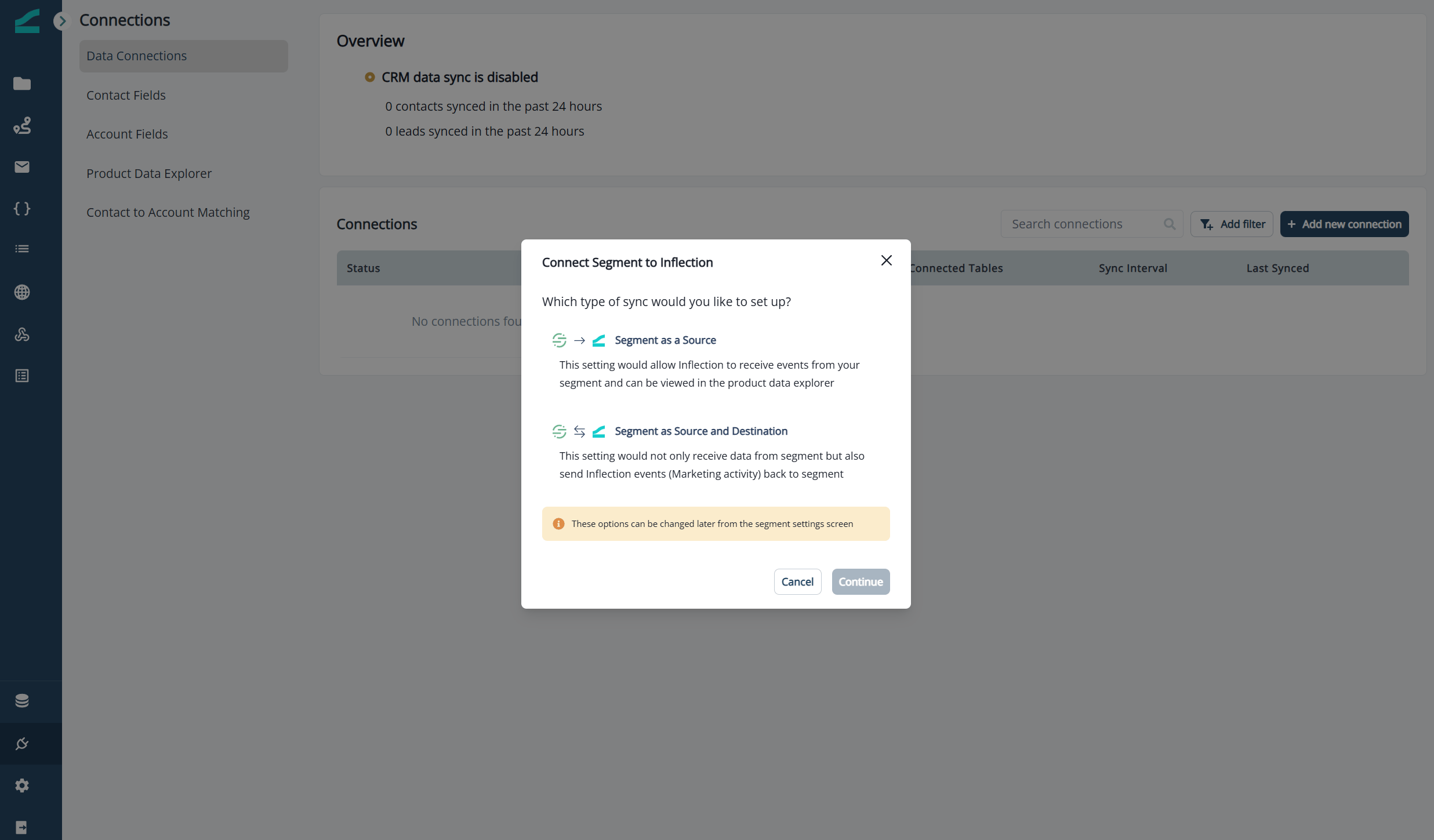
- Segment as a Source: Send product events from Segment to Inflection, where they can be used for targeting and segmentation. (These can be product events from your website, application, mobile devices, etc.).
- Segment as a Source and Destination: In addition to the above, send Inflection events to Segment. (These include marketing activities such as delivered, opened, clicked, bounced an email.)
Segment as a Source
Inflection can receiveidentify, track, and group calls from Segment.
- User information from
identifycalls map to Inflection contacts. - Workspace information from
groupcalls map to Inflection orgs. - Activities and activity attributes from
trackcalls map to product activities.
Segment as a Destination
Inflection can export marketing activities (email events, journey activity, and form & inbound webhook submissions) directly to Segment. This makes it easier for your marketing, ops, and data teams to create reports and run analytics in their BI tools. The events and attributes are supported:Journey Completed vs. Journey Exited: Journey Completed is triggered when a record finishes all flow steps in the journey and reaches the end. Journey Exited is triggered when a record meets the journey’s exit criteria and exits the journey.
Email events currently include both the legacy
campaign_id, campaign_name, and campaign_run_id properties and their replacements journey_id, journey_name, and journey_run_id. We will be removing campaign_* properties in future releases. Update any reports or downstream models that reference the campaign_* properties to use the journey_* properties.Example Payloads
Email event:Set up & Configuration
Segment as a Source
-
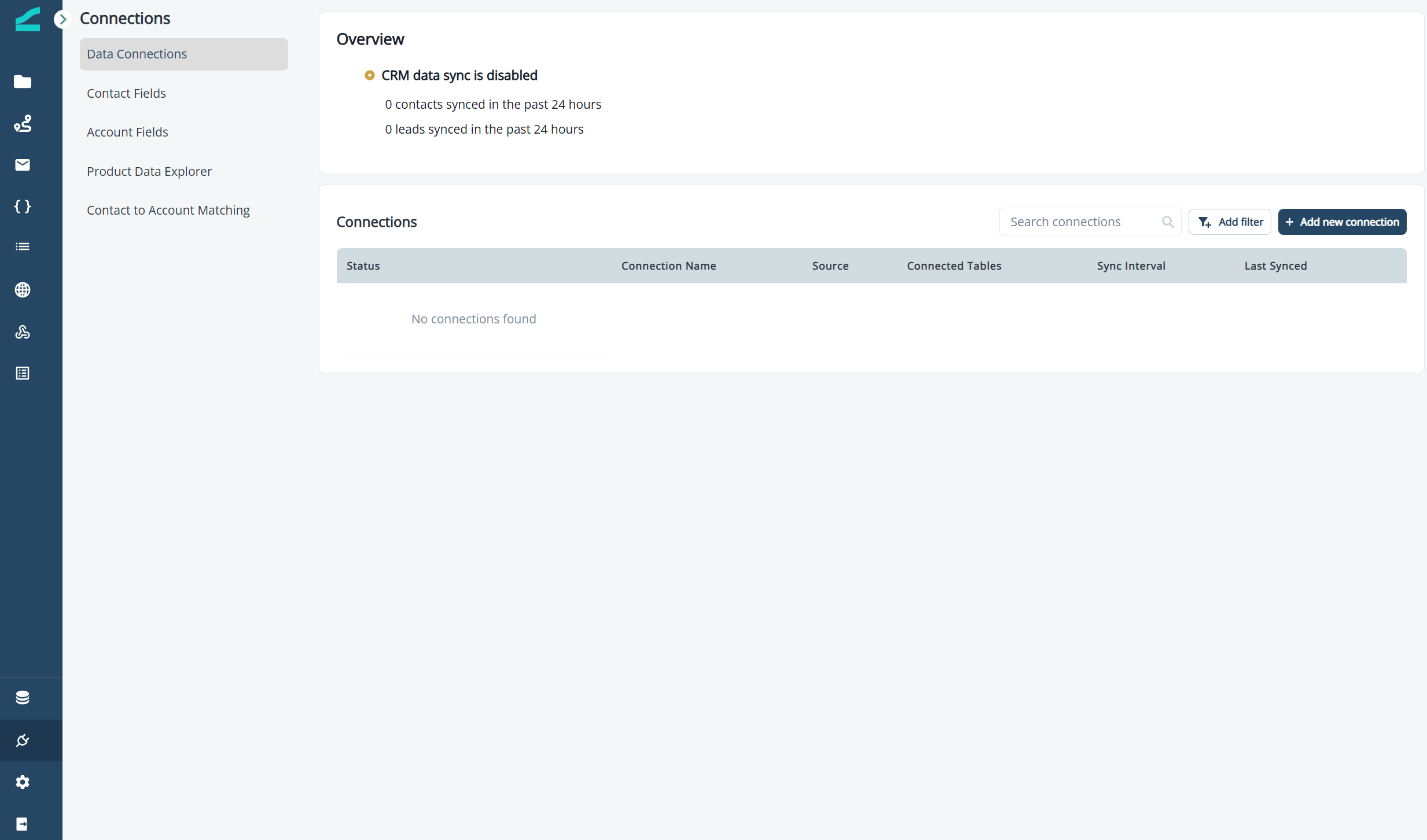
Navigate to Connections and select Add new connection
-
Select Segment as a Source or Segment as a Source and Destination.
-
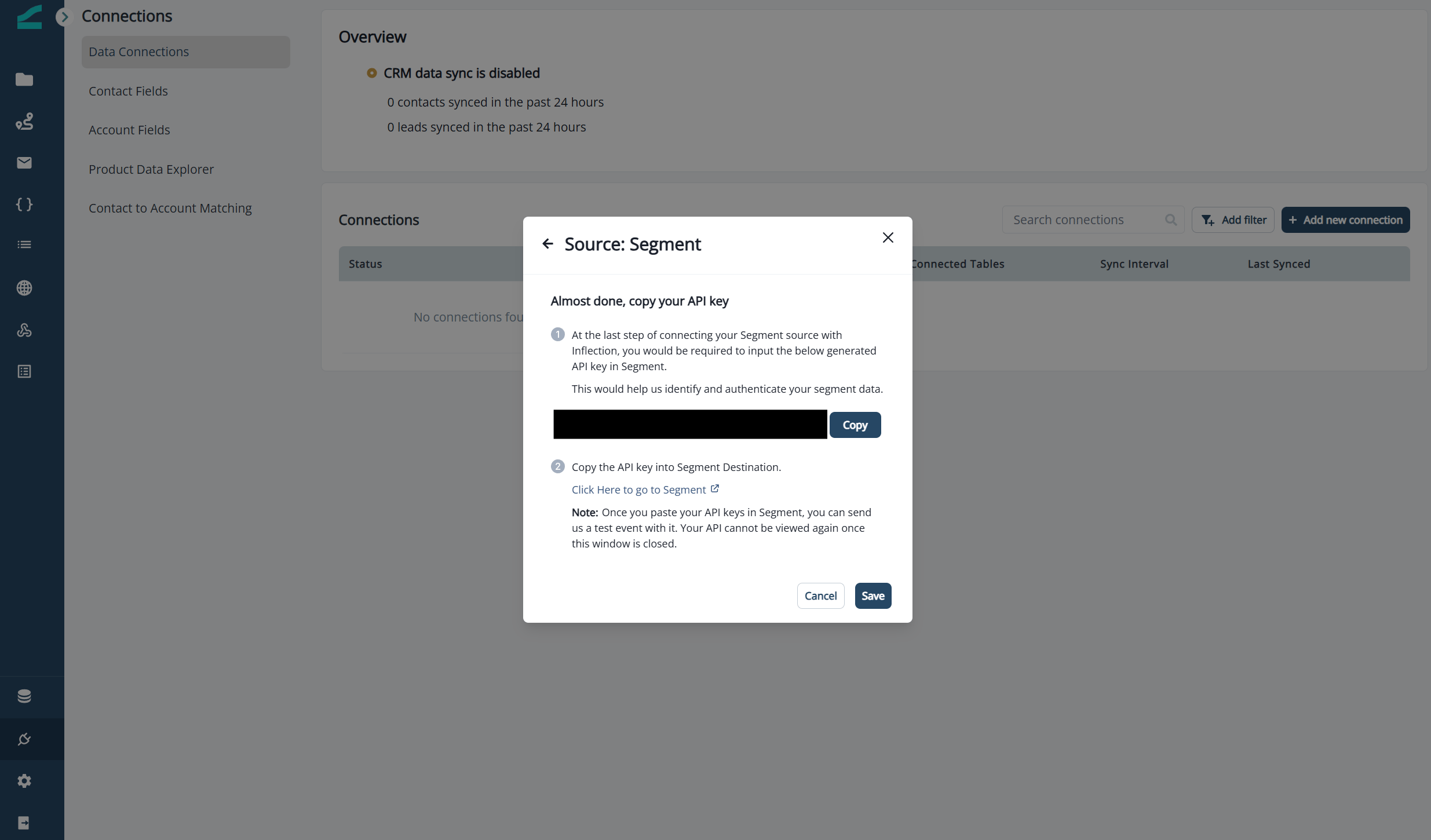
Copy the provided API key into your Segment destination and click Save in Inflection.
Segment as a Destination
- From the Source catalog page in the Segment App, select Inflection.
- Get the API write key generated by Segment, and paste it in inflection.
- The data will be sent to Segment and you will be able to see those events in Segment.
Monitoring
Once configured, monitor incoming data in Connections > Segment > Sync Activity.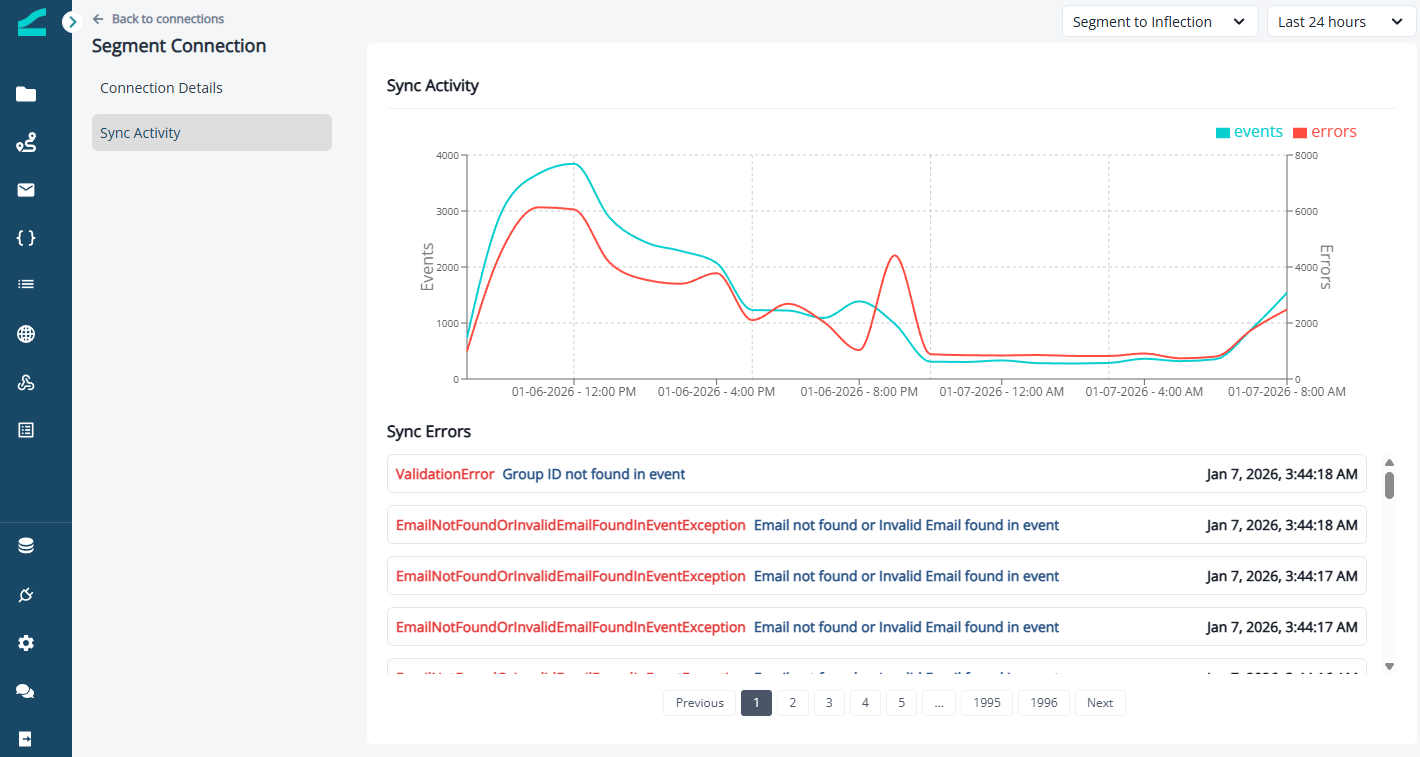
Mapping
For events and attributes coming from Segment to be usable in Inflection, you must complete mapping.Segment Events to Inflection
Navigate to Connections > Product Data Explorer. Use the toggle to the right of each event to enable or disable the event. When an event is enabled, it is available for segmentation, list building, and personalization.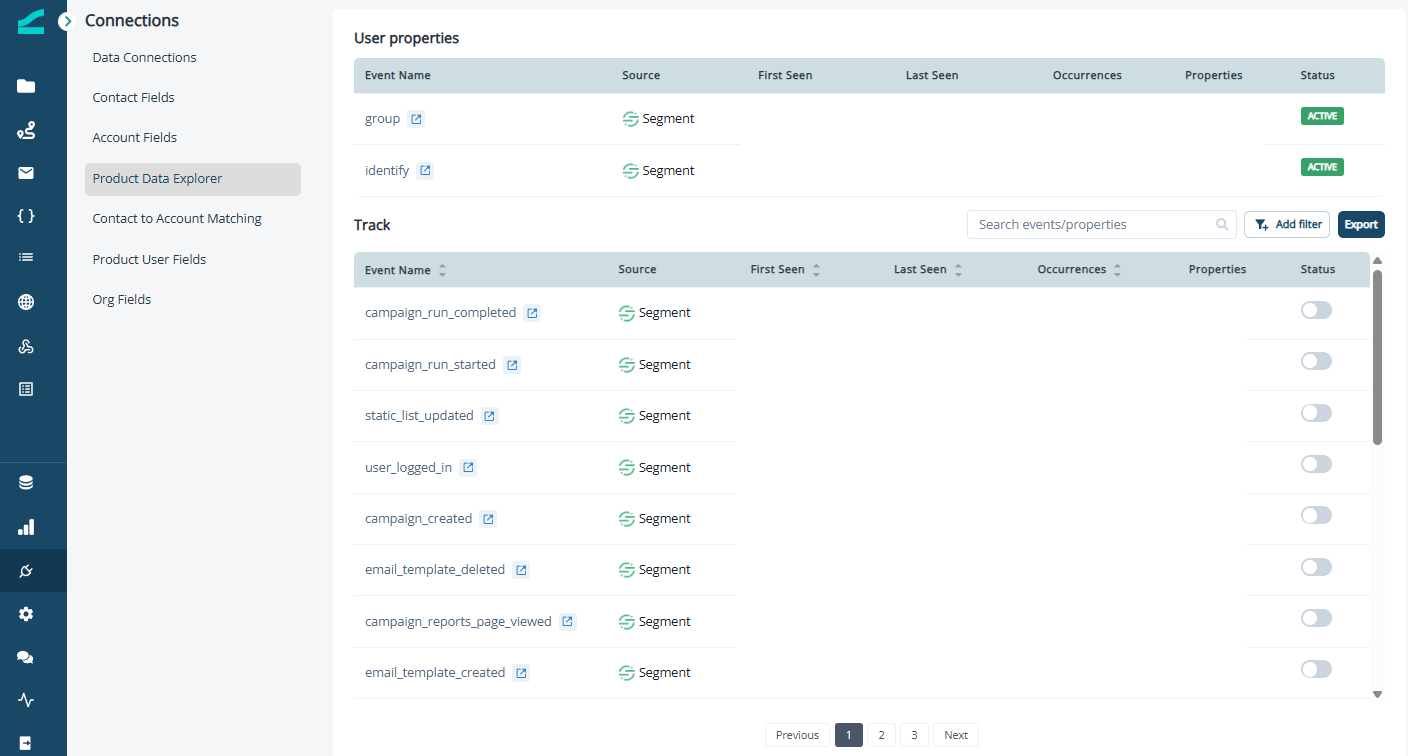
Segment User and Org Attributes to Inflection
Work with your customer support contact to map user and org attributes. To see which attributes are available for mapping, click into the group and identify headers on the Product Data Explorer screen. Once mapped, these attributes will be available for segmentation, list building, and personalization.
- Identify calls require user ID and email address.
- Group calls require user ID and group ID.
Inflection Events to Segment
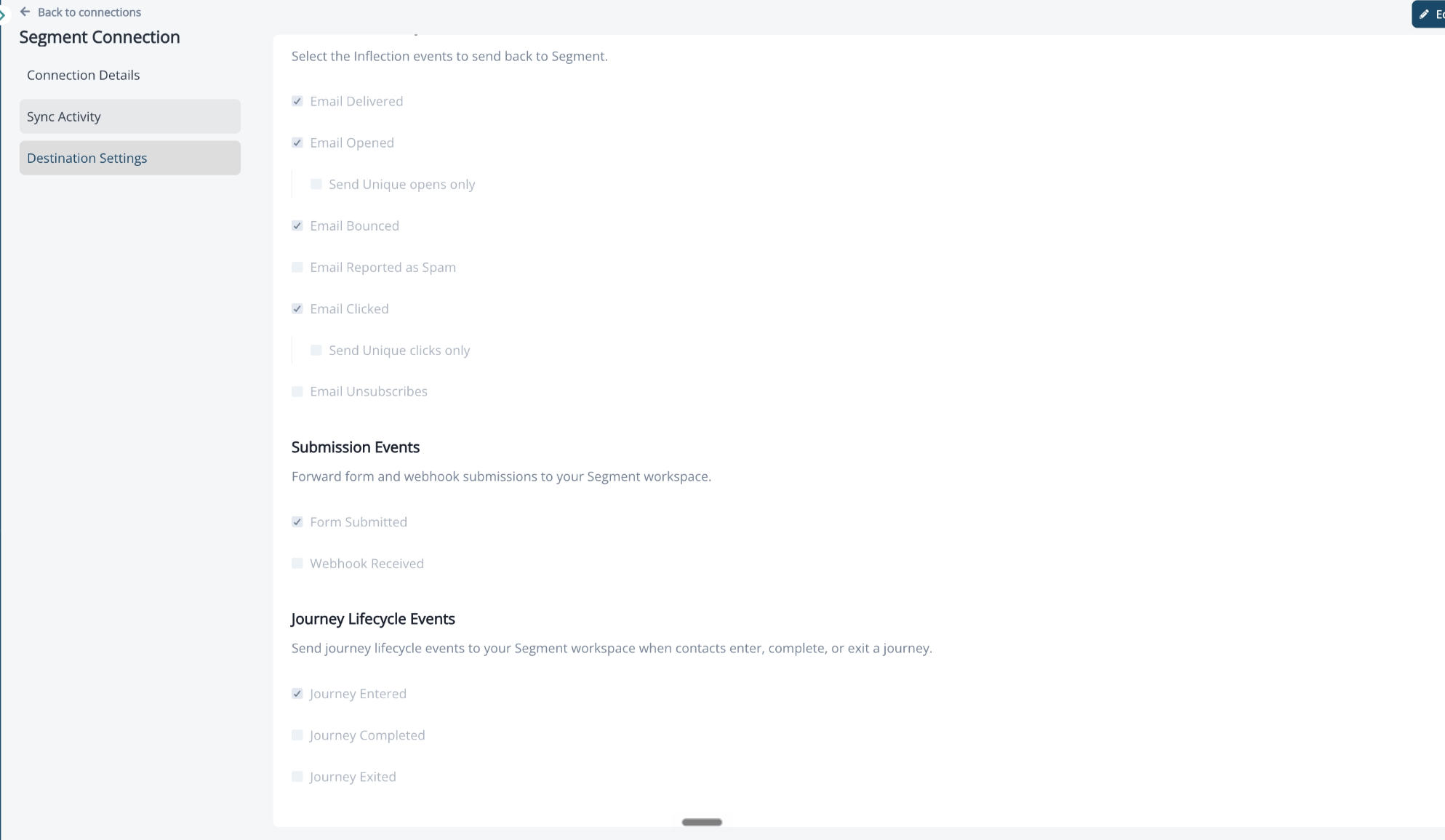
- Navigate to Connections > Segment and open the Destination Settings tab.
- Click Edit in the top-right corner.
- Select the Inflection events to send back to Segment:
- Email events: Email Delivered, Email Opened (optionally Send Unique opens only), Email Bounced, Email Reported as Spam, Email Clicked (optionally Send Unique clicks only), and Email Unsubscribes.
- Submission Events: Form Submitted and Webhook Received.
- Journey Lifecycle Events: Journey Entered, Journey Completed, and Journey Exited. Select these to send an event to Segment when a contact enters, completes, or exits a journey.
- Save your changes.
Map Segment Identify Traits to Contact Fields
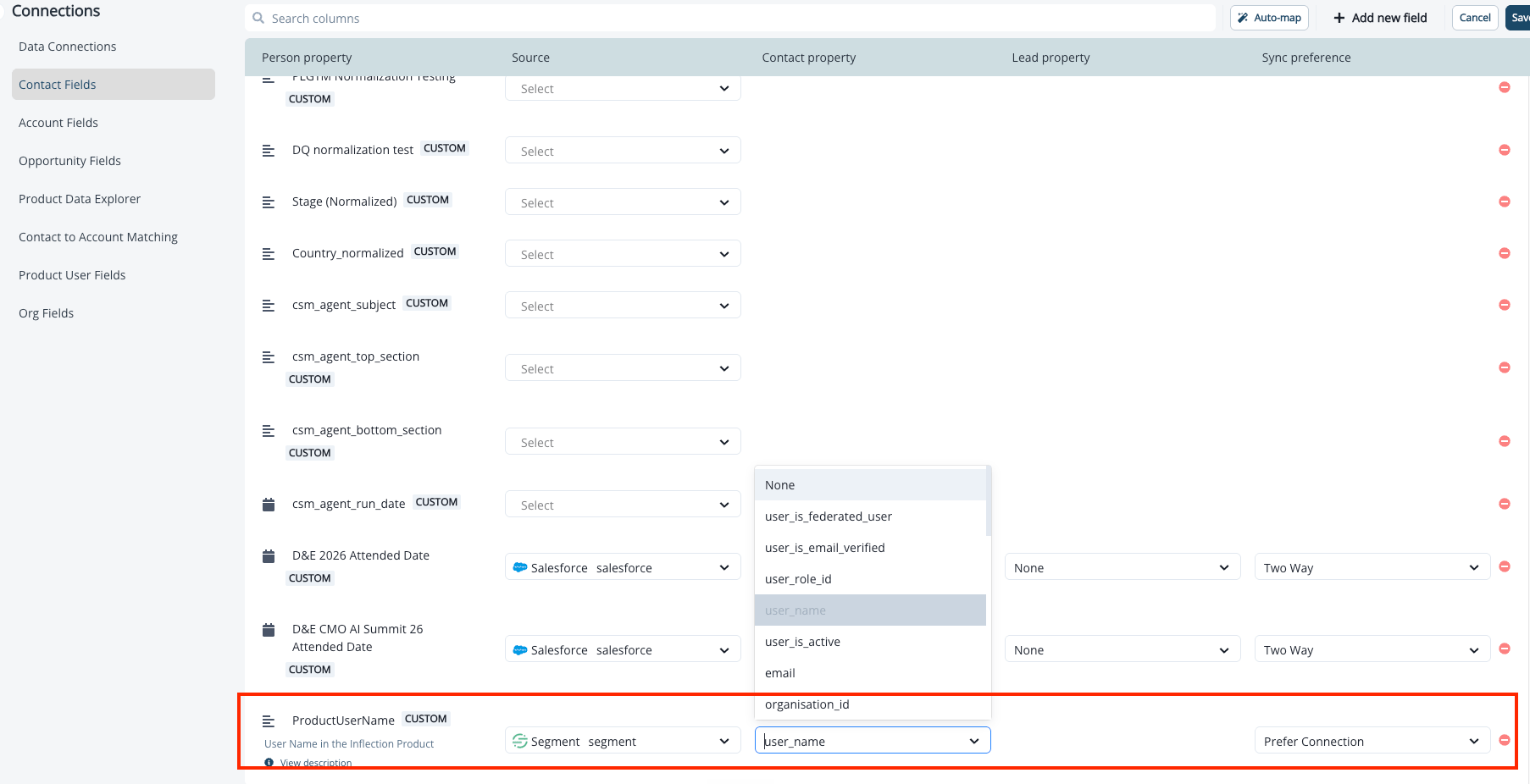
Map the traits coming from your Segment identify calls directly to Inflection contact fields.- Navigate to Connections > Contact Fields.
- Locate the Inflection contact field you want to populate from Segment. To add a new one, click + Add new field.
- In the Source column, select Segment.
- In the Contact property column, select the Segment identify trait to map (e.g., user_name, email, organisation_id). The dropdown lists every trait Inflection has seen on a recent identify call for your connection.
- Click Save.
When creating a new custom field for Segment data, make sure the field type matches the trait type in your Segment payload. Mapping an Inflection field that is Boolean to a Segment trait that is a string can result in sync errors.
Segment Connection FAQs
How does Inflection map email addresses from Segment identify calls?
How does Inflection map email addresses from Segment identify calls?
Inflection maps email addresses from Segment identify calls using the following priority:
- Top-level email field from the identify call payload
- Email extracted from traits (properties) if top-level email does not exist
- Email extracted from the
userIdfield if neither above exists
Are contacts only created in Inflection through Segment Identify calls? Can they be created through Segment events (track calls)?
Are contacts only created in Inflection through Segment Identify calls? Can they be created through Segment events (track calls)?
A Segment Identify call is required to create a new contact in Inflection. A new contact cannot be created directly from a Segment track call.If product users are created in Inflection through a data warehouse connection and the product user IDs match the user IDs in Segment track calls, the track call will attach to the existing user or contact record without requiring a Segment identify call.
Does Inflection support nested JSON properties from Segment?
Does Inflection support nested JSON properties from Segment?
Inflection will treat nested JSON properties as a string.