Monthly Marketed Contacts
MMCs are unique contacts (unique by email address) who route through one or more Inflection journeys in a given calendar month (i.e. August 1-August 31).- Inflection does not charge for contact database volume, marketable contacts, seats or data volumes.
- Non-personalized batch journeys (i.e. typical newsletters) do not count against MMC cap, provided there are no MMC-triggering elements in the batch journey.
Read a more detailed MMC description here: MMCs (Monthly Marketed Contacts).
The Dashboard
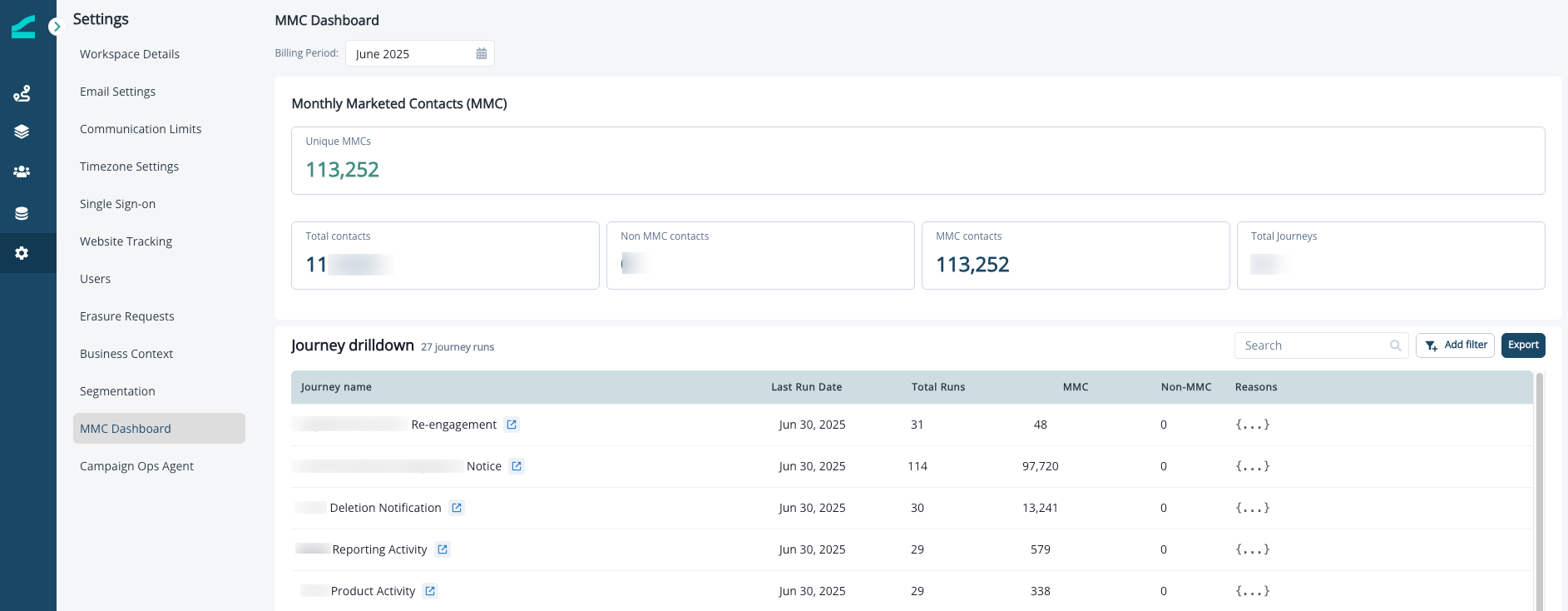
The MMC Dashboard displays how many contacts your Inflection instance has processed in a given month, giving you visibility into MMC and non-MMC usage overall and journey-by-journey. When you open the MMC Dashboard, you’ll see:-
Summary Metrics
- Unique MMCs: Unique contacts who meet MMC criteria in the selected month
- Total Contacts: All contacts who qualified for a journey (both MMC and non-MMC) in the selected month
- Non MMC Contacts: Unique contacts who qualified for journeys that do not meet MMC criteria in the selected month
- MMC contacts: Unique contacts who meet MMC criteria in the selected month
- Total Journeys: The number of journeys in a selected month used for MMC and Non MMC calculations
-
Journey Drilldown
The Journey drilldown is designed to help you quickly identify MMC vs Non MMC counts and reasons for MMC qualification.
A detailed table shows:
- Journey Name
- Last Run Date
- Total Runs (sortable)
- MMC vs Non MMC Totals (sortable)
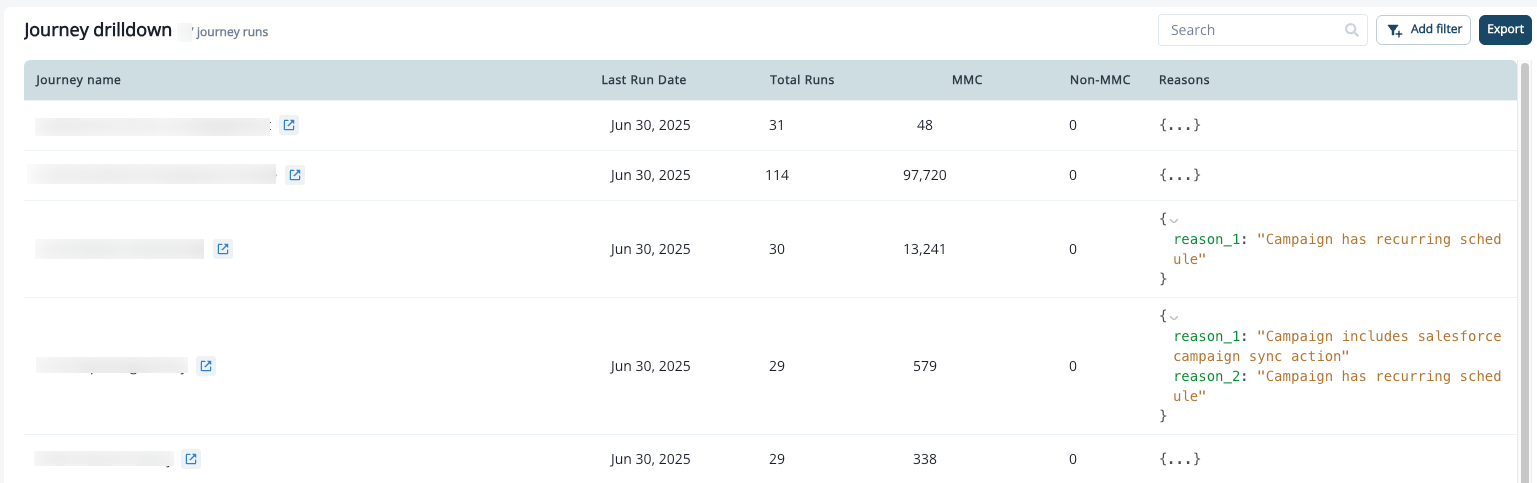
- Reasons (additional context on qualification)
Trigger Journeys appear in the Journey Drilldown alongside scheduled journeys. For a Trigger Journey:
- Every enrolled contact counts as an MMC, so the Non MMC total is always 0.
- Total Runs is the number of times the journey was triggered during the month. A contact is still counted as one MMC (unique by email) even if they trigger the journey multiple times.
- The Reasons column identifies the journey as a Trigger Journey.
Filtering Option
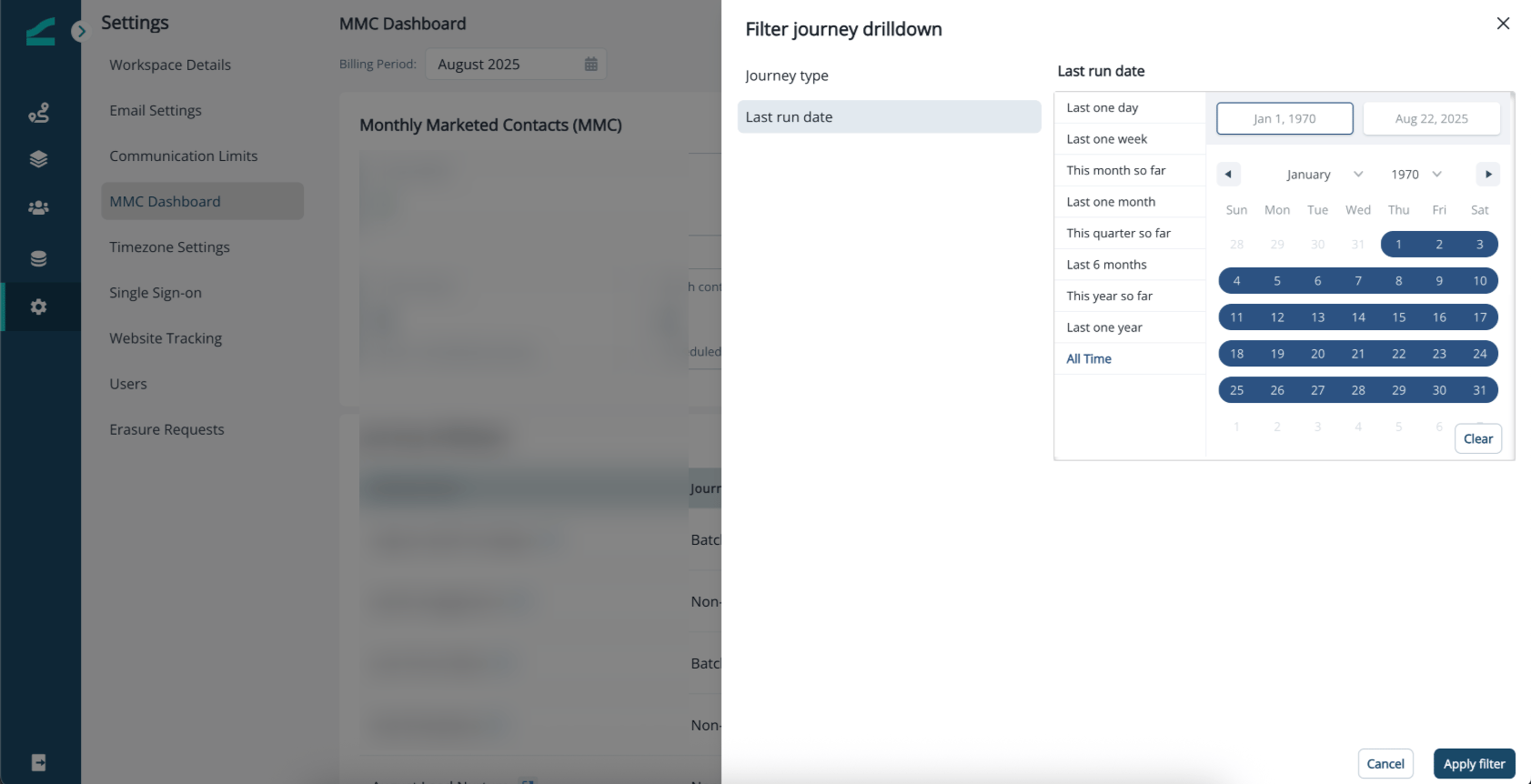
You can filter the journey drill-down by:- Last Run Date – pick from quick options (last week, last month, last quarter, etc.) or set a custom date range using the calendar picker.